
Atlas
The knowledge base PandaOS writes for itself out of your work.
Ignore rules matter more than they look
A project holding credentials, customer data or a vendored dependency tree has things Atlas should never read. The rules are how you say so.
What it is
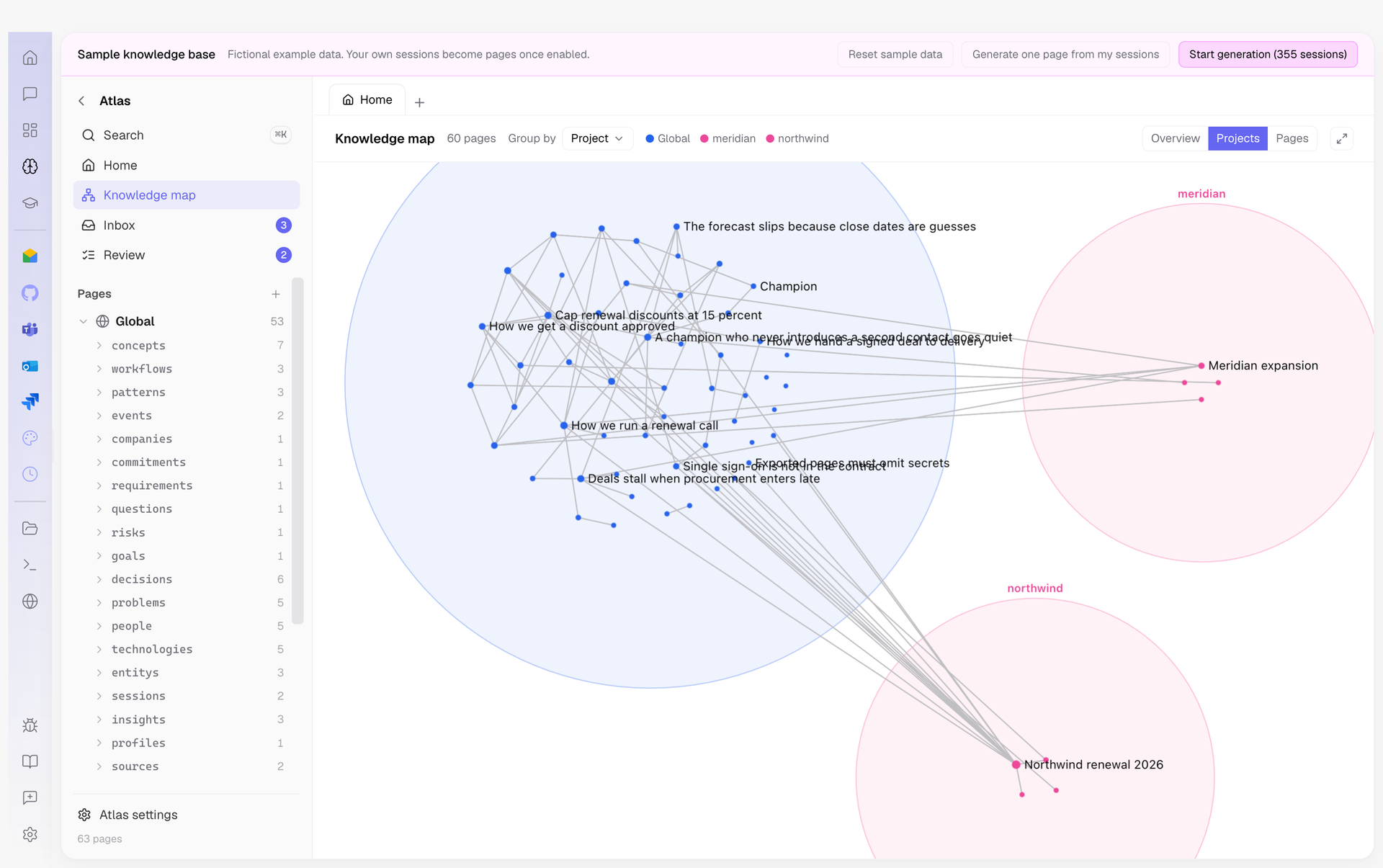
Not a folder you maintain. Atlas distils what you have already done, the decisions, the problems, the shape of a project, so a chat months from now can be told what was already worked out.
What it costs
Writing runs in the background rather than inside your turn, so it never competes with the answer you are waiting for, and Spend is the ceiling on it.
What it may read, and share
Watched projects picks where knowledge comes from and ignore rules carve out what is off limits inside them. Sharing exports files rather than publishing a link, so handing knowledge to someone never puts it online.
How Atlas learns
Atlas learns passively from your conversations and project activity. You do not need to feed it documents or write configuration files. As you work - asking questions, making decisions, iterating on code - Atlas picks up on patterns: the frameworks you prefer, the coding style you follow, the way you structure projects.
You can review and manage what Atlas knows at any time. The knowledge is yours to inspect and curate, not a black box.
Design
Prototypes, mockups, decks, documents, motion and screen recordings, built on a canvas and shareable by link.
Docker
Your local containers, images, volumes, networks and compose stacks inside PandaOS, with a shell, a file browser and a filesystem diff for every container, and the same surface exposed to Panda as tools.